|
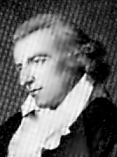 Born
in 1759 in the little duchy of Würtemberg, Friedrich von
Schiller was the son of an army officer. Although the young boy
disliked the strict regimentation of his father's chosen profession,
he was forced by the Duke of Würtemberg to enter a military
academy. Trapped and overcome with depression, Schiller began
to compose morbid poetry. He found some comfort in these literary
diversions, but after composing his first play--The Robbers
(1782)--Schiller's writing was discovered by his superiors, and
he was forbidden to write. The young dramatist quickly determined
to desert the army and flee to Mannheim where he lived under
an assumed name and made his living as a court playwright and
stage manager. During this period, he penned such plays as Fiesko
(1783), Intrigue and Love (1784) and Don Carlos
(1787).
Between 1787 and 1798, Schiller wrote no plays, instead devoting
himself to historical studies--The Revolt of the Netherlands
and A History of the Thirty Years War--which won him
fame as a historian. In 1794, however, Schiller established a
close friendship with Johann Wolfgang von
Goethe. Under Goethe's influence, Schiller soon returned
his attentions to the craft of playwriting and, during the period
that followed, composed his most mature dramas including Wallenstein's
Camp (1798), The Piccolomini (1799), Wallenstein's
Death (1799), Mary Stuart (1800), The Maid of Orleans
(1801), and William Tell (1804.) In 1799, he took up residence
in Weimar where he and Goethe collaborated to make the Weimar
Theatre one of the most prestigious theatrical houses in Germany.
On May 9, 1805, Friedrich Schiller died of tuberculosis. He
was only forty-six years old. His plays, however, along with
those of Goethe, had established a theatrical rennaissance in
Germany which would become known as "Weimar Classicism."
For more than a century after his death, Schiller remained the
favorite playwright of the German people.
|